Thursday, December 18, 2014

Airbags

Airbags have protected lives of people in car crashes for over 35 years.Car airbags were invented by Allen Breed in 1968. Before then, airbags were just used in airplanes.

The bags work with a sensor that senses the impact of the collision, then it sends a signal to the inflators, which blow up the airbags with nitrogen gas. This all happens in about 0.025 of a second because it needs to inflate before the person's head swings towards the bag. There is always an airbag in front of the driver and passenger seats. There is also airbags on the sides of the front and rear seats. 


Since their invention, the death rate in car crashes has decreased dramatically. Scientists are still working on improving airbag technology today.

Sources:Here, Here, and Here

Wednesday, December 17, 2014

What is your birthstone?

To find out about your birthstone click HERE.

Stephen Hawking

HERE is my presentation about Stephen Hawking along with my 3 sources.

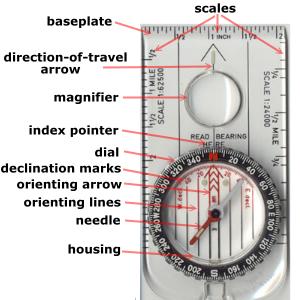
Compass navagation

Before the invention of the compass, people used the sun and stars to find there way.  The Big Dipper points to the North Star and in the Southern Hemisphere, the southern cross constellation points to the south.  

"In the 11th Century there was a chinese scientist named Shen Kua who invented the magnetic compass using a needle and lodestone which is a hard, black magnetic rock... After this discovery, sailors began to use magnetic compasses to find their way across the ocean." (Worldbook, pg. 91)  They would use a long piece of lodestone hanging by a string that would point North/South to help them navigate.

Hikers and Sailors in the 21st century still use magnetic compasses to find their way.  However, with the invention of G.P.S. (Geographic Positioning System) traditional compasses are not used as much anymore.  There is still a sport that uses compasses, it is called orienteering.  I found a website where they organize groups to compete in orienteering.  There are also instructional videos that explain how to use compass and maps for navigation of trails.  

I am glad that compasses were invented so people can find their way and not be lost.  

Sources:


WorldBook's Young Scientist book 2, Magnetic Power and Electricity.  

Monday, December 15, 2014

Mummies


Here is a video teaching about mummies. I got my info at : Denver Museum Of Nature and Science

Petrified Wood

Here is a vlog teaching you about petrified wood.  My sources were: The Denver Museum of Nature and Science,


Radio waves

In the car we listen to music on the radio by tuning to a station which is a specific wave length. The antenna receives electromagnetic radio waves.  The radio converts these waves into vibrations in the speaker that create sound waves we can hear.

Radio waves have the longest wavelengths in the electromagnetic spectrum.   "An electromagnetic wave is characterized by its frequency and time variation of the electric and magnetic fields."

In the late 1880's Henry Hertz proved the existence of radio waves.  "He used a spark gap attached to an induction coil and a separate spark gap on a receiving antenna. When waves created by the sparks of the coil transmitter were picked up by the receiving antenna, sparks would jump its gap as well. Hertz showed in his experiments that these signals possessed all the properties of electromagnetic waves."

Radio waves are made by various types of transmitters. Interference in radio waves can be cause by lightening which is why the radio experiences fuzziness when in a storm.  I am glad radio waves were discovered because I like to listen to music in the car.


I got my information Herehere,here and Science by Miles kelly